


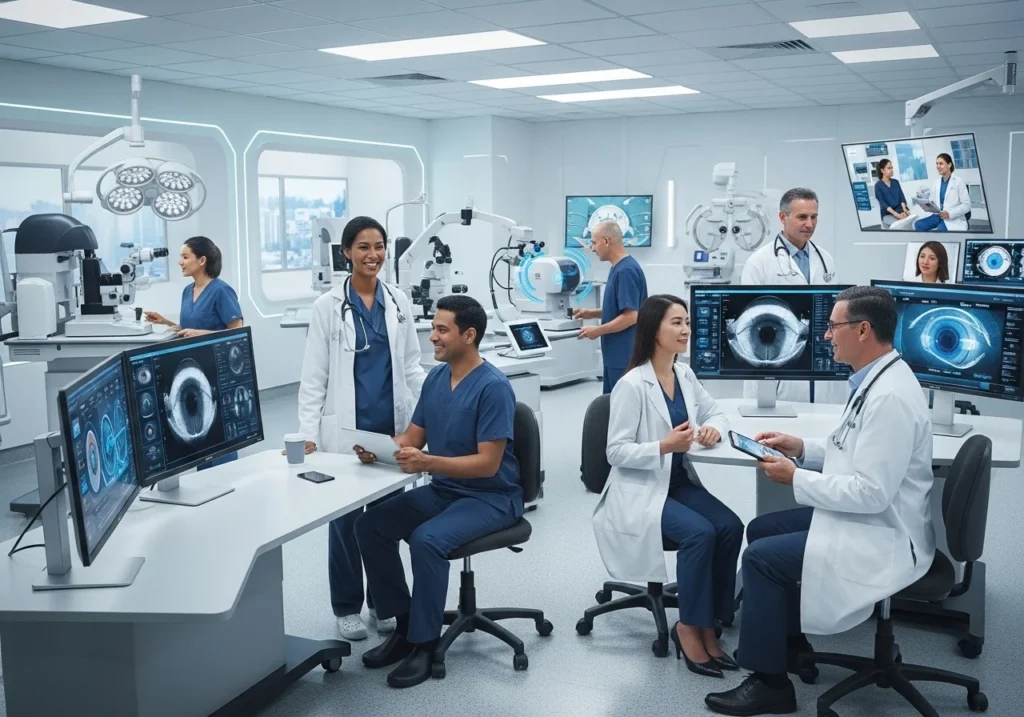
In a decisive transformation reshaping the contours of modern healthcare, optometrists are emerging as pivotal contributors to a more integrated, preventive, and patient-centric ecosystem. No longer confined to refractive care and vision correction, today’s optometrists are evolving into highly skilled clinical professionals who play a critical role in systemic disease detection, interdisciplinary collaboration, and technology-driven healthcare delivery.
A New Era of Early Diagnosis and Prevention
At the forefront of this transformation is the expanding role of optometrists in early diagnosis and risk identification. Through comprehensive ocular examinations enhanced by advanced imaging technologies they are increasingly able to detect early signs of systemic conditions such as diabetes mellitus, hypertension, autoimmune disorders, cardiovascular disease, and even neurodegenerative conditions.
The retina, often described as a “mirror of systemic health,” allows optometrists to identify subtle microvascular and neurological changes long before symptoms appear elsewhere in the body. This capability positions them as vital gatekeepers in reducing diagnostic delays and improving long-term patient outcomes.
Technology Driving Precision Healthcare
“Modern optometry has transcended traditional boundaries. It is no longer limited to prescribing lenses it is about enabling holistic healthcare through precision diagnostics and intelligent technology,” said Suman Anjoy, Chief Operations Officer at a leading healthcare group, with over 23 years of experience in transforming healthcare services at the leadership level.
“With the integration of Artificial Intelligence (AI), Machine Learning (ML), and advanced imaging, optometrists are uniquely positioned to act as early sentinels of systemic disease. The eye truly offers a non-invasive gateway into the body’s overall health,” he added.
AI-powered diagnostic tools, cloud-based patient records, and portable imaging devices are enabling faster, more accurate diagnoses while supporting real-time consultations and remote screenings.
Strengthening Multidisciplinary Collaboration
The evolving role of optometrists is further reinforced by their integration into multidisciplinary care teams. Today, they collaborate closely with ophthalmologists, neurologists, endocrinologists, pediatricians, rehabilitation specialists, and primary care physicians to ensure comprehensive patient management.
Their contributions span several specialized areas, including:
- Neuro-optometric rehabilitation for patients recovering from traumatic brain injuries and stroke
- Pediatric vision care, supporting developmental milestones and learning outcomes
- Digital eye strain management, addressing the growing impact of screen use
- Geriatric and low-vision care, improving independence and quality of life in aging populations
Expanding Access Through Innovation
Beyond clinical settings, optometrists are playing a crucial role in improving healthcare accessibility. Through tele-optometry platforms and mobile diagnostic units, they are reaching rural, remote, and underserved populations.
The use of AI-enabled screening tools, cloud-based systems, and portable retinal imaging devices allows for:
- Real-time remote consultations
- Early disease screening
- Scalable healthcare delivery models
These innovations are helping bridge long-standing gaps in access to quality eye care.
Enhancing Performance and Rehabilitation
In high-performance environments such as sports medicine and occupational health, optometrists are enhancing visual performance, reaction time, and hand-eye coordination through specialized training programs.
In rehabilitation sciences, they are helping patients regain functional vision through customized therapies, significantly improving both productivity and quality of life.
Aligning with the Future of Healthcare
This paradigm shift aligns closely with the global transition toward preventive, predictive, and value-based healthcare. With their unique blend of clinical expertise and technological adaptability, optometrists are becoming indispensable in this evolving model—helping reduce healthcare costs, improve early intervention rates, and deliver better patient outcomes.
The Need for Policy and Educational Support
Despite their growing importance, there remains a pressing need for stronger policy recognition, structured training pathways, and enhanced interdisciplinary frameworks.
Empowering optometrists through advanced education, regulatory support, and inclusion in mainstream healthcare planning will be essential to fully unlock their potential.
Conclusion
As healthcare systems worldwide grow increasingly complex, one message stands clear: optometrists are no longer peripheral providers they are central architects of the future of integrated healthcare.
In recent years, the healthcare landscape has undergone a major transformation, and optometrists are emerging as key contributors to this change. Traditionally associated with vision testing and prescribing glasses, optometrists are now playing a much larger role in modern healthcare. Their expanding responsibilities include early disease detection, collaboration with other medical professionals, and the use of advanced technologies to improve patient outcomes.
This shift reflects a broader move toward preventive and patient centered healthcare. Instead of focusing only on treating diseases, the healthcare system is now prioritizing early detection and prevention. Optometrists are uniquely positioned to support this approach because the eye provides valuable insights into overall health.
One of the most significant contributions of optometrists is their role in identifying systemic diseases at an early stage. Comprehensive eye examinations can reveal early signs of conditions such as diabetes, high blood pressure, cardiovascular disease, and neurological disorders. The retina allows healthcare professionals to observe blood vessels and nerve tissues directly, making it possible to detect abnormalities before symptoms appear in other parts of the body.
Early diagnosis plays a crucial role in improving health outcomes. When diseases are detected early, patients can receive timely treatment, reducing the risk of complications and long term damage. This not only improves quality of life but also helps lower overall healthcare costs. Optometrists act as an important first step in this process by identifying potential health risks and referring patients to specialists when necessary.
Technology has been a driving force behind the growing importance of optometrists in healthcare. Advanced tools such as retinal imaging and optical coherence tomography allow for detailed examination of the eye. These technologies enable optometrists to detect even minor changes that could indicate serious health issues.
Artificial intelligence is further transforming the field of optometry. AI based systems can analyze eye scans, identify patterns, and assist in diagnosing diseases with high accuracy. This enhances efficiency and supports better decision making. In addition, cloud based platforms and digital health records are improving communication between healthcare providers, ensuring that patients receive coordinated and comprehensive care.
Another key aspect of this transformation is the integration of optometrists into multidisciplinary healthcare teams. They now work closely with ophthalmologists, neurologists, endocrinologists, pediatricians, and general physicians. This collaborative approach ensures that patients receive well rounded care that addresses both vision and overall health.
Optometrists are also making significant contributions in specialized areas. In pediatric care, they help detect vision problems that can affect learning and development. Early intervention can improve academic performance and support overall growth. In adults, the increasing use of digital devices has led to a rise in eye related issues such as digital eye strain. Optometrists provide guidance on managing screen time and maintaining eye health in a digital world.
Geriatric care is another important area where optometrists are playing a vital role. As people age, they are more likely to experience vision problems and eye diseases. Optometrists help older adults maintain independence by providing appropriate vision care and rehabilitation services.
Beyond clinical practice, optometrists are contributing to public health by improving access to care. Tele optometry services and mobile clinics are making it possible to reach people in rural and underserved areas. These innovations are helping bridge gaps in healthcare access and ensuring that more individuals receive timely eye care.
Optometrists are also involved in sports and occupational health. They help athletes improve visual performance, coordination, and reaction time. In workplace settings, they ensure that employees have optimal vision, which contributes to safety and productivity.
The evolving role of optometrists aligns with the global shift toward preventive and value based healthcare. By focusing on early detection and overall wellness, they help reduce the burden on healthcare systems. Their ability to combine clinical expertise with modern technology makes them an essential part of the future healthcare ecosystem.














Leave a comment