



Autoimmune rheumatic diseases are increasingly being linked to a higher risk of cardiovascular complications. Conditions such as Rheumatoid Arthritis, Systemic Lupus Erythematosus, Psoriatic Arthritis, and Axial Spondyloarthritis are not only associated with joint and systemic inflammation but also significantly increase the risk of heart disease. Emerging research now suggests that GLP-1 receptor agonists may offer a promising strategy to reduce cardiovascular risk in these patients.
This article explores how GLP-1 receptor agonists work, their potential benefits in autoimmune conditions, and what current evidence reveals about their role in improving heart health.
Elevated Cardiovascular Risk in Autoimmune Rheumatic Diseases
Patients with autoimmune rheumatic diseases face a substantially higher risk of cardiovascular complications compared to the general population. Chronic systemic inflammation plays a central role in accelerating atherosclerosis, a condition where plaque builds up in the arteries, leading to heart attacks and strokes.
Several factors contribute to this increased risk:
Persistent inflammation that damages blood vessels
Frequent use of medications such as glucocorticoids and NSAIDs
Higher prevalence of metabolic conditions like obesity, hypertension, and Type 2 Diabetes
These overlapping risk factors create a complex health profile that requires comprehensive management strategies. While lifestyle interventions such as diet and exercise remain essential, newer pharmacological options are gaining attention.
What Are GLP-1 Receptor Agonists
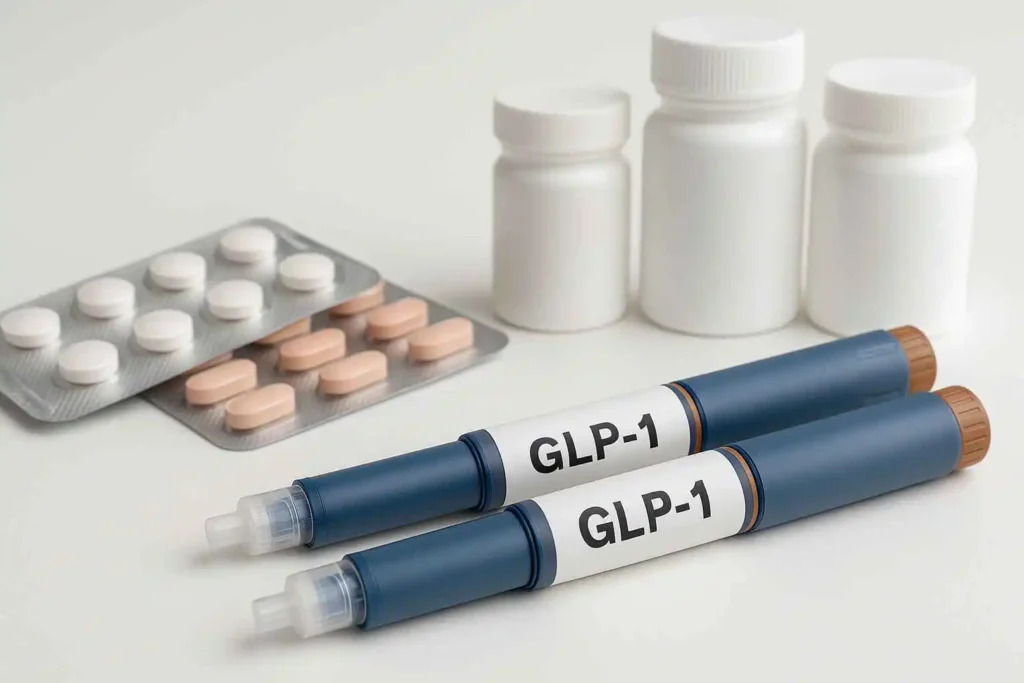
GLP-1 receptor agonists, often referred to as GLP-1RAs, are a class of medications initially developed to treat type 2 diabetes. They mimic the action of a natural hormone called glucagon like peptide 1, which is released in response to food intake.
These drugs help regulate blood sugar levels by:
Stimulating insulin secretion
Reducing glucagon release
Slowing gastric emptying
Promoting a feeling of fullness
Beyond glucose control, GLP-1 receptor agonists have shown multiple benefits that extend to cardiovascular health.
How GLP-1RAs Support Heart Health
GLP-1 receptor agonists act on receptors found throughout the body, offering both metabolic and cardiovascular advantages. Their benefits include:
Lowering blood glucose levels
Reducing body weight and appetite
Decreasing blood pressure
Improving cholesterol and lipid profiles
Reducing systemic inflammation
One of the most promising aspects of GLP-1RAs is their ability to influence atherosclerosis directly. Research suggests that these medications may stabilize plaque in the arteries, making it less likely to rupture and cause heart attacks.
Additionally, GLP-1RAs may reduce post meal lipid spikes and decrease overactivity of the sympathetic nervous system, which contributes to high blood pressure.
Evidence Supporting GLP-1RAs in Autoimmune Conditions
Recent observational studies and real world data have highlighted the potential cardiovascular benefits of GLP-1 receptor agonists in patients with autoimmune rheumatic diseases.
Patients with conditions like rheumatoid arthritis and lupus who used GLP-1RAs showed:
Lower rates of major adverse cardiovascular events
Reduced all cause mortality
Improved metabolic health markers
These findings are consistent with results seen in broader populations with diabetes and obesity, suggesting that the benefits of GLP-1RAs extend beyond glucose control.
Preclinical studies in animal models have also demonstrated anti inflammatory and anti atherogenic effects. These include:
Reduction in T cell mediated inflammation
Modulation of immune cell activity through central nervous system pathways
Decreased vascular inflammation
There is also early evidence suggesting that GLP-1RAs may be beneficial in managing heart failure with preserved ejection fraction, a condition commonly seen in patients with chronic inflammatory diseases.
The Role of Inflammation and Metabolism
A key reason GLP-1 receptor agonists are gaining attention in autoimmune diseases is their dual impact on inflammation and metabolism.
Chronic inflammation is a hallmark of autoimmune conditions and a major driver of cardiovascular disease. At the same time, metabolic disorders like obesity and diabetes further amplify this risk.
GLP-1RAs address both aspects simultaneously by:
Reducing inflammatory markers
Improving insulin sensitivity
Supporting weight loss
Enhancing vascular function
This makes them particularly valuable for patients with overlapping cardiometabolic and autoimmune conditions.
Limitations and Future Research
While the current evidence is promising, several questions remain unanswered. Most studies have focused on rheumatoid arthritis and lupus, with limited data available for other autoimmune diseases.
Future research should aim to:
Evaluate long term safety and effectiveness
Study combination therapies with drugs like SGLT2 inhibitors
Explore multi agonist treatments targeting additional metabolic pathways
Determine whether benefits are independent of weight loss and glucose control
Understanding these aspects will help clinicians better integrate GLP-1RAs into treatment strategies for autoimmune rheumatic diseases.
Clinical Implications
The potential of GLP-1 receptor agonists to reduce cardiovascular risk represents a significant advancement in the management of autoimmune rheumatic diseases. These medications offer a multi targeted approach that addresses both metabolic dysfunction and chronic inflammation.
For clinicians, this means having an additional tool to manage patients who are at high risk of cardiovascular complications. For patients, it offers hope for improved long term outcomes and reduced mortality.
Conclusion
GLP-1 receptor agonists are emerging as a promising therapy for reducing cardiovascular risk in autoimmune rheumatic diseases. By targeting key pathways involved in inflammation, metabolism, and vascular health, these drugs provide a comprehensive approach to managing complex health conditions.
Although more research is needed, current findings strongly support the potential of GLP-1RAs to transform care for patients living with autoimmune diseases and increased heart risk.














Leave a comment